POSITION · FOR OWNERS
How do you make a luxury yacht feel like your own?
Almost every owner brings aboard a piece with a story. Where it goes decides how the whole boat should work.
What you take from this
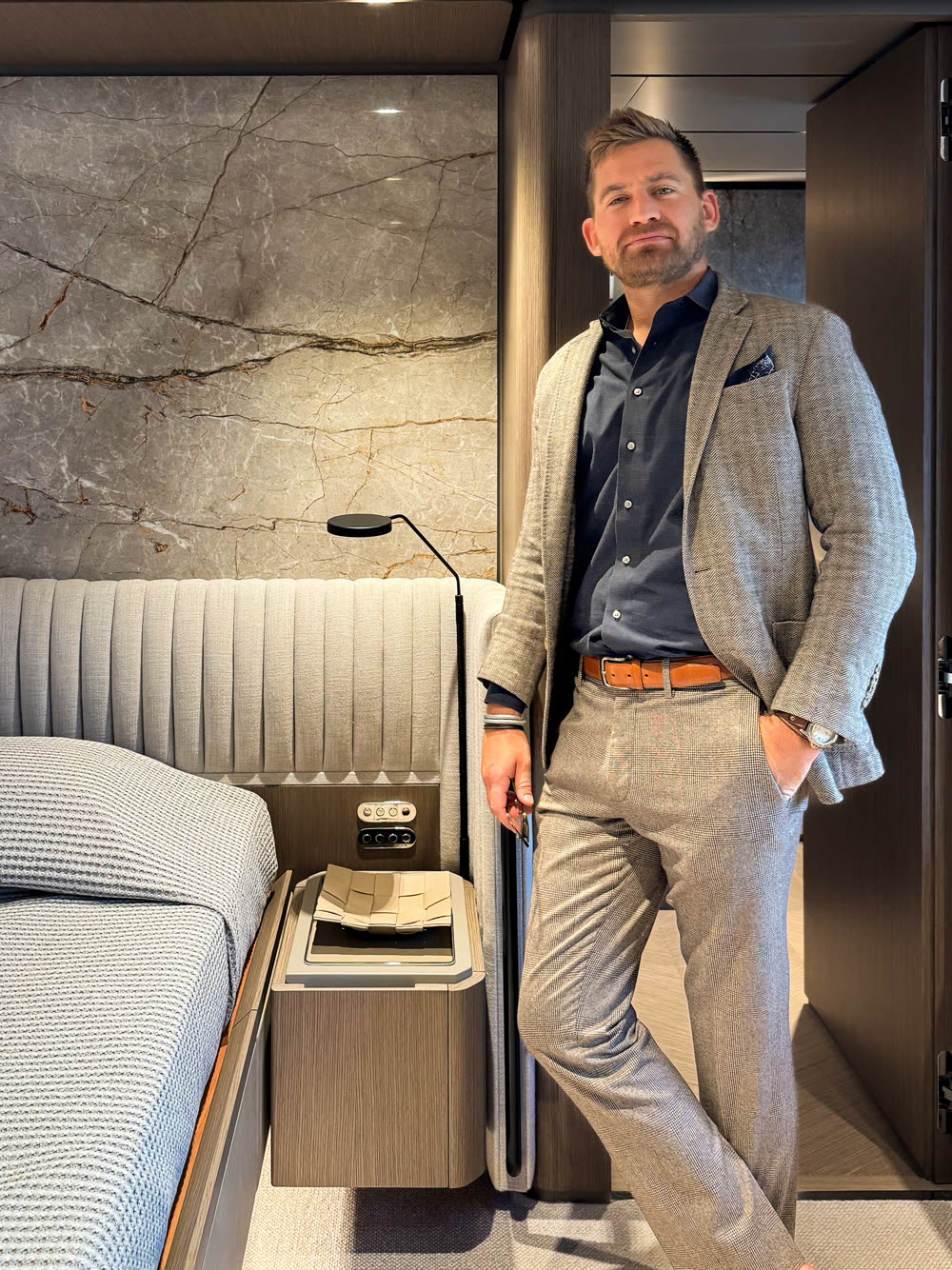
A yacht feels like your own when the interior makes room for what you already love: the art, the pieces and the stories you bring aboard. Ryan Altman, who has designed more than fifty yacht interiors over more than a decade, starts with a calm, neutral base that works as a stage, then builds around the owner's own pieces, so the boat is both admired and enjoyed.
- A yacht feels like yours when it holds something you already love.
- A neutral base isn't a lack of personality. It's the stage the owner builds on.
- Admired and enjoyed aren't a trade-off. A good interior is both.
Most owners bring something aboard that no designer chose
It happens on almost every project. Somewhere in the middle of the process, after the layout and the materials and the long conversations about who's coming aboard, the owner pulls out a photo on their phone. We were in the Bahamas, they'll say, and we found this. Or it's a painting from a trip to Italy, a carved piece from a market on the other side of the world, something from the first year of their marriage. Can we put it somewhere on the boat?
There's always a story. A trip, a memory, the way they started. And they trust me to find it a home.
I've come to think that moment is the most important one in the whole project. Partly for the piece itself, mostly for what it tells me about the person.
Most yacht interiors are designed before anyone owns them
To understand why, you have to know how a lot of yachts get made.
Many boats are built before they have an owner. A shipyard commits to a model, and the interior has to work for whoever eventually buys it, designed long before anyone knows whose it will be. Those interiors need to appeal to a lot of people at once, so they lean on a calm, neutral base: light woods, soft tones, natural textures.
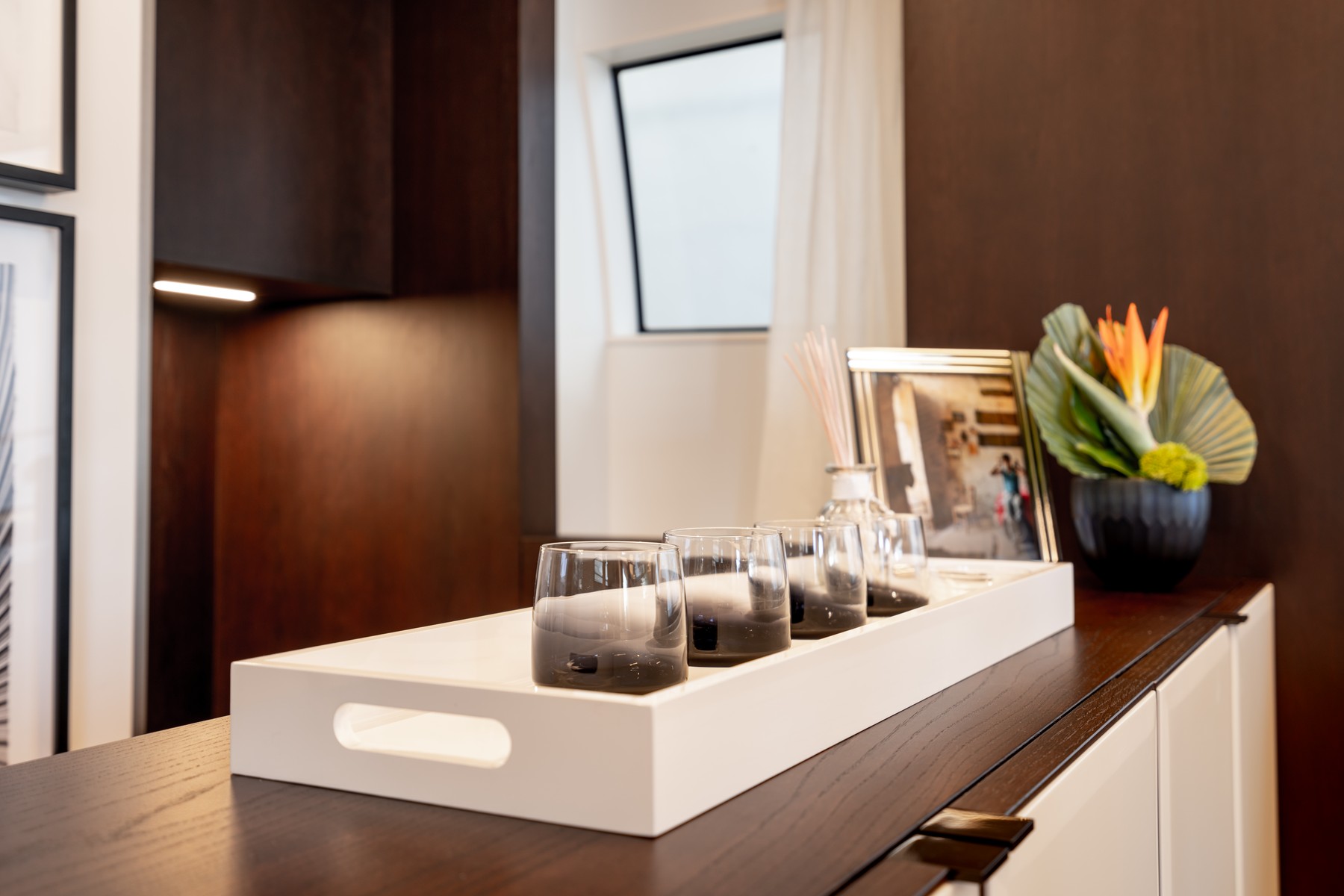
That base is a stage. The floors, the walls and the built-in furniture are the parts that are expensive and slow to change, so they're designed to hold anything. The color, the art and the pieces with stories are what the owner brings to it. If a color doesn't work, it can be changed by the afternoon.
Owners think they have to choose between beautiful and livable
The owners I work with often arrive with a quiet assumption: that they'll have to pick. Either the boat is beautiful, something to be proud of when guests step aboard, or it's comfortable, somewhere you can actually live.
I understand where that comes from. And the way people use their boats has changed. The formal dining table on most boats I design ends up as a desk, with a laptop on it for half the day. Dinners move up to the flybridge, where the breeze and the view are. People are barefoot. There are kids and dogs aboard.
But it's a false choice. A yacht should be both admired and enjoyed: beautiful enough to take real pride in, and comfortable enough to live on. I think of it as a sanctuary and a stage for life on the water, and a good interior is both at once.
The piece with a story does both jobs
This is where that photo on the phone comes back in.
The piece an owner brings from a trip is the one object aboard that does both jobs perfectly. It's something to show. Guests notice it, ask about it, and the owner gets to tell the story. And it's something to live with. It's theirs, it carries a memory, and it makes the boat feel like home rather than a beautiful place they're visiting.
So the question I'm really asking is where that piece belongs. Which wall, which light, which view from which seat. The answer usually tells me how the whole space should work. Style, much like a thumbprint, is unique to every individual, and the piece they bring is the clearest print they'll ever give me.
If you had a yacht, what's the first thing you'd bring aboard? And what would it say about you?
What I learned alongside Marty Lowe
I learned to see this way alongside Marty Lowe. She would find something extraordinary, a piece with real presence, and trust me to find where it belonged in a space that was never built for it. On a yacht, where you can't move a wall or raise a ceiling, that's a discipline of its own, and it's where I learned mine.
I've been doing some version of it ever since, across more than fifty projects and seven years as the U.S. designer for Ferretti Group America. The difference now is whose piece it is: it used to be hers, and now it's the owner's, and finding its place is how a boat stops being a model and starts being someone's.
A yacht becomes yours when that piece finds its place
You can wake up in a different port every morning and still be in your own room. That's the whole promise of a yacht. But it only feels like your own room if something in it came with you.
So when an owner shows me that photo and asks whether it can go somewhere on the boat, the answer is almost always yes. It's the moment the project becomes about them.
FAQ
How do you make a yacht interior feel personal?
Start with a calm architectural base, then build around what the owner already loves: their art, collected pieces and the way they actually use the boat. The personal layer lives in art, textiles and loose furniture, so it can evolve over time.
Why are so many yacht interiors neutral?
Many yachts are designed before they have an owner, so the base has to appeal broadly. A neutral foundation also works as a stage: color, art and personal pieces can be added or changed without touching the built-in structure.
Can you bring your own art and furniture onto a yacht?
Usually, yes. A designer checks the weight, how the piece is secured, and how it handles motion, sun and salt, then finds the right wall, light and position for it.
Can a yacht interior be both luxurious and comfortable?
Yes. The best interiors are designed to be admired and enjoyed at the same time: refined materials that stand up to real use, seating that's genuinely comfortable, and spaces planned around how the owner lives aboard.
Does personalizing a yacht interior affect resale value?
It can, if the personality is built into the structure. Keeping the architecture neutral and expressing personality through art, textiles and loose pieces protects resale, because those can leave with the owner.