LETTER
Anchored in the Details
Design was on one side of the house and construction was on the other. This work isn't something I arrived at. It's what I've been standing in front of my whole life.
What you take from this
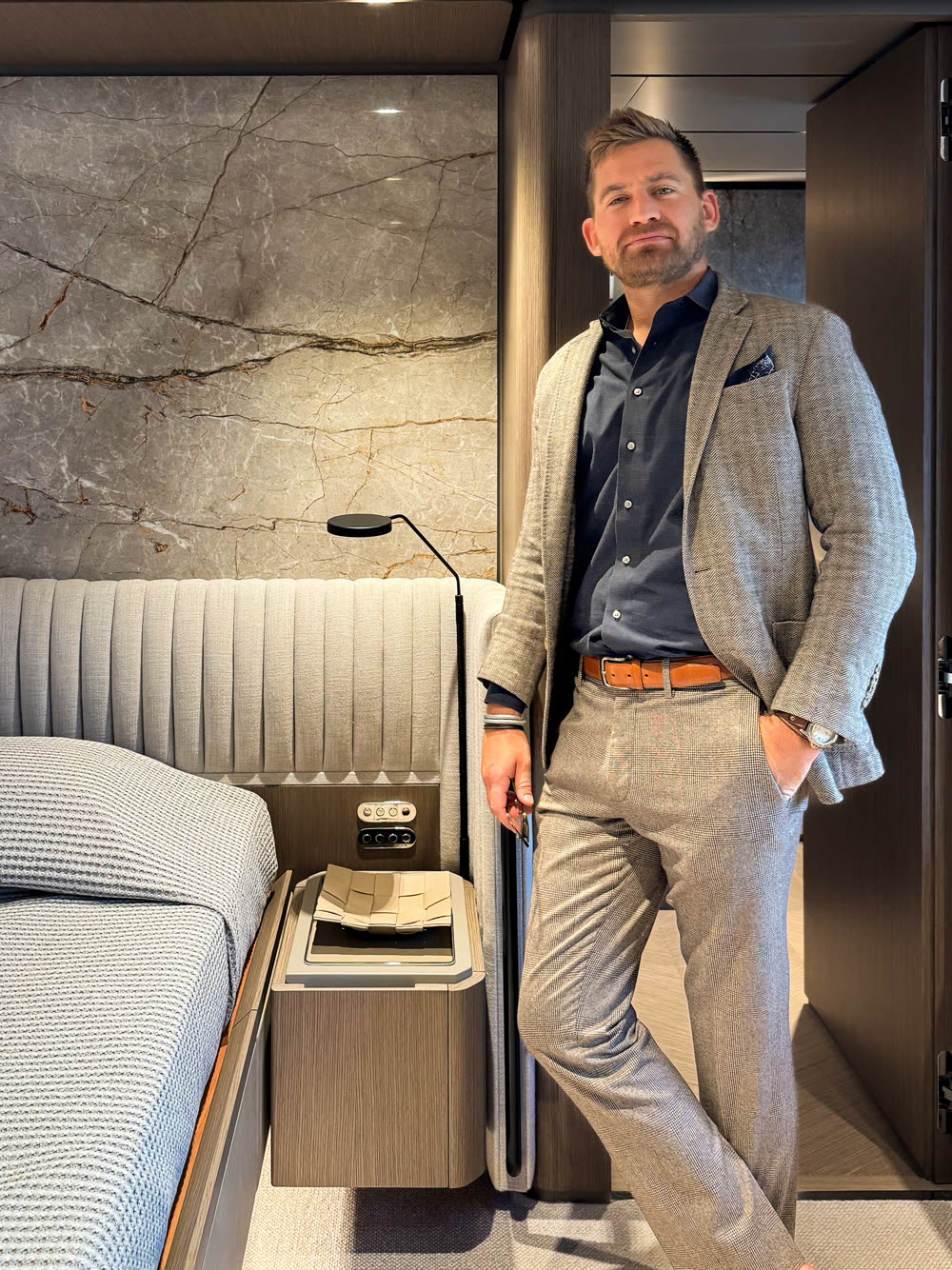
Ryan Altman grew up between construction and yacht design, learned the trade beside his mother, Marty Lowe, and spent seven years as the U.S. designer for Ferretti Group America. His rule: the floor is physics and the character is the person.
- Hull one was designed for the Mediterranean. On this side of the water, air conditioning, refrigeration and materials that survive salt, sun and bare feet year round change the boat.
- The floor is physics and the character is the person: what changes for the Caribbean isn't about being American, and what is cultural is how each owner wants to live aboard.
- A design that can't be built, or that fights the boat it goes into, is a wish. Knowing construction is what makes drawings get built the way they're drawn.
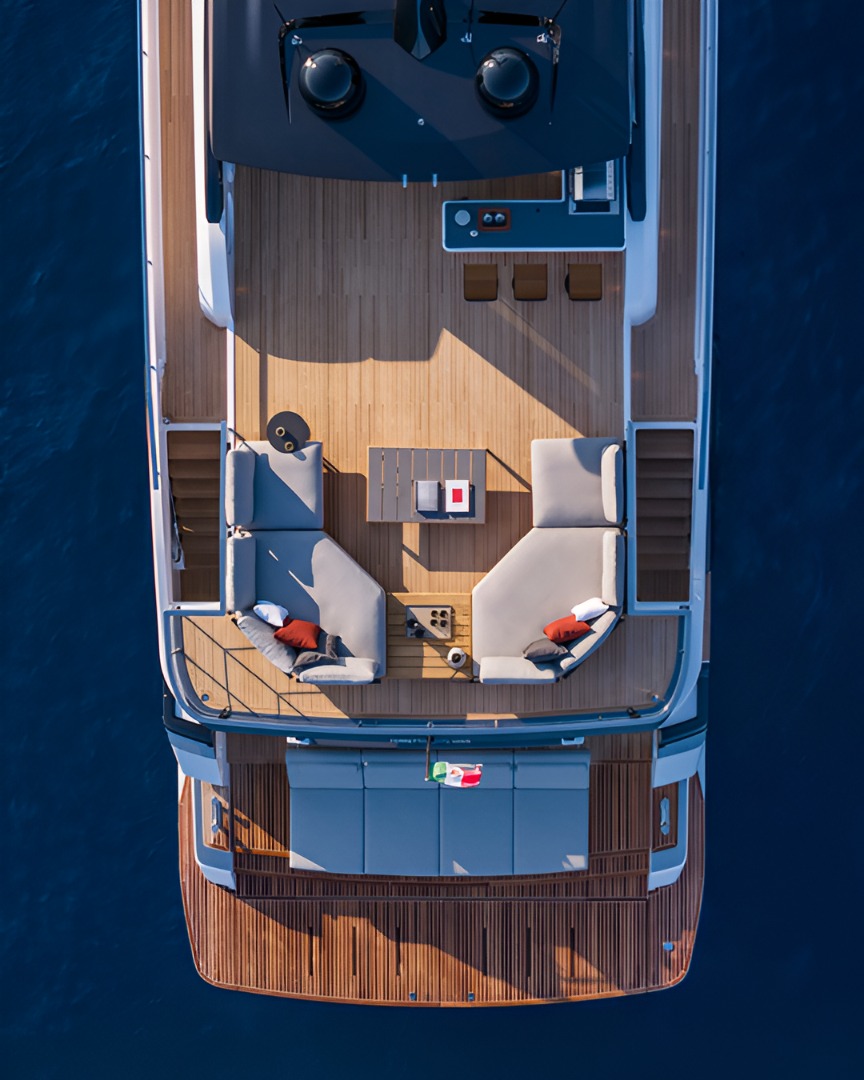
I design luxury yacht interiors, and I specialize in something very few people do well: taking a yacht built for the European market and making it work for an owner on this side of the water.
Over the past decade I've done that across more than fifty projects, including seven years as the U.S. designer for Ferretti Group America. It's a narrow, demanding specialty, and it's the one M2Develop is built on.
I was raised into this world from both sides. My father was a builder and developer; my mother is the yacht designer Marty Lowe. I grew up between the two: blueprints across the office floor on one side, drawings and the boats they became on the other. By the time this became my own profession, I had spent my life around how these boats get built and how the people who own them actually live. That is the foundation. What I have built on it is my own.
The work, and why it's rare
For seven years my job was to take an Italian yacht and make it right for the American owner: everything from carpets, wallcoverings and freestanding furniture to exterior selections and the smallest finishing details. But the design is only part of it. The role meant understanding how owners, brokers, dealers, shipyards and distributors all move around a single project, what a yacht needs to present well at a boat show, and how to make an extraordinarily complex build feel clear and effortless to the person paying for it.
Here's the specific problem I solve. A builder finishes hull one for the European market. Hull two comes to the Americas and debuts at Fort Lauderdale, and before a designer intervenes, both hulls are identical. People assume the changes I make are about taste, that Americans simply want a different look. They don't.
Hull one was never wrong. It was designed for a different ocean.
The Caribbean is not the Mediterranean. Air conditioning is enormous here: getting AC up onto the flybridge was a genuine milestone, and in the Med no one is having that conversation. Ice, refrigeration, appliances: American owners are specific about them in ways that don't translate. And everything you touch has to survive salt, sun and bare feet year round, because the season never really ends. None of that is about being American. It's about being on this side of the water, the same for a family from Ohio, a family from Mexico City, or an owner who keeps his boat in Florida and flies in from Milan.
What is cultural sits on top of that. An American owner tends to make his own coffee and sit with the captain to talk through the day: first names, the whole crew, more like family. Many of my Latin American clients want the opposite: more formal, more service, no stepping around staff to reach the galley. Neither is better. They are simply different boats. The floor is physics; the character is the person. My work is getting the floor exactly right and then reading the person correctly, and doing both, at this level, is rarer than it should be.
What I believe a yacht is for
A yacht should not be a museum.
These are spaces meant to be used. I want an owner to feel they can put their feet up, set a drink down, and never think twice about it. You're on the water, you're moving, you can wake in a different port and still be in your own room. A boat should be built for its owner to live in fully, not to be admired from the doorway.
That is not an argument against beautiful things. My clients almost always have a story about a piece: where they found it, what trip it was, why it matters. And they trust me to give it a home aboard. That isn't a museum. That's memory, and the point is to build new memories on top of it.
Designing for owners I never meet
Some of the most significant boats I've designed were for owners I never spoke to. On one, the family made every decision in the studio and I never met the owner. On another, everything ran through an attorney, and the finished yacht sat for eight months before the owner first stepped aboard. You cannot ask those clients how they want to live. You have to read it, and reading it correctly, every time, is the discipline the whole job rests on.
The clearest example I have is a client who had built his business from nothing and kept every hotel room key from the entire climb, Motel 6 up to the Four Seasons. We built a wall from them in his den. He never told me who he was. He didn't have to.
That is the work, finally. It was never about making a boat prettier. It is about understanding precisely how someone will live aboard, and building for that. Which is why, on every project, I ask the same question:
Are you building this to be looked at, or to be lived in?
I know my answer.
Ryan Altman, Founder & Principal Designer, M2Develop
FAQ
Why do European yachts need to be redesigned for American owners?
It isn't about taste. Hull one was designed for the Mediterranean; on this side of the water, air conditioning, ice, refrigeration and appliances matter in different ways, and everything you touch has to survive salt, sun and bare feet year round.
Who is Ryan Altman?
The founder and principal designer of M2Develop in Fort Lauderdale. He grew up between his father's construction work and his mother Marty Lowe's yacht design practice, learned yachts working beside her, and spent seven years as the U.S. designer for Ferretti Group America.
Can M2Develop design a yacht for an owner it never meets?
Yes. Some of the studio's most significant boats were for owners Ryan never spoke to, with decisions made by the family or run through an attorney. The work becomes reading how they will live aboard.